
Enlarged Prostate (BPH): Symptoms, Causes, and Treatment Options
- Dr. Charles Drew

- Apr 6
- 4 min read
Introduction
An enlarged prostate, also known as benign prostatic hyperplasia (BPH), is a common condition affecting many men as they age. The prostate gland surrounds the urethra, the tube that carries urine out of the body. When the prostate enlarges, it can press against the urethra and cause urinary problems.
Although BPH is not cancerous, it can significantly affect quality of life if left untreated. Many men experience symptoms such as frequent urination, difficulty starting urination, or weak urine flow.
Understanding the symptoms, causes, and treatment options for enlarged prostate is essential for maintaining good prostate health. This guide by Ivermectinkart explains everything you need to know about BPH and how it can be managed effectively.
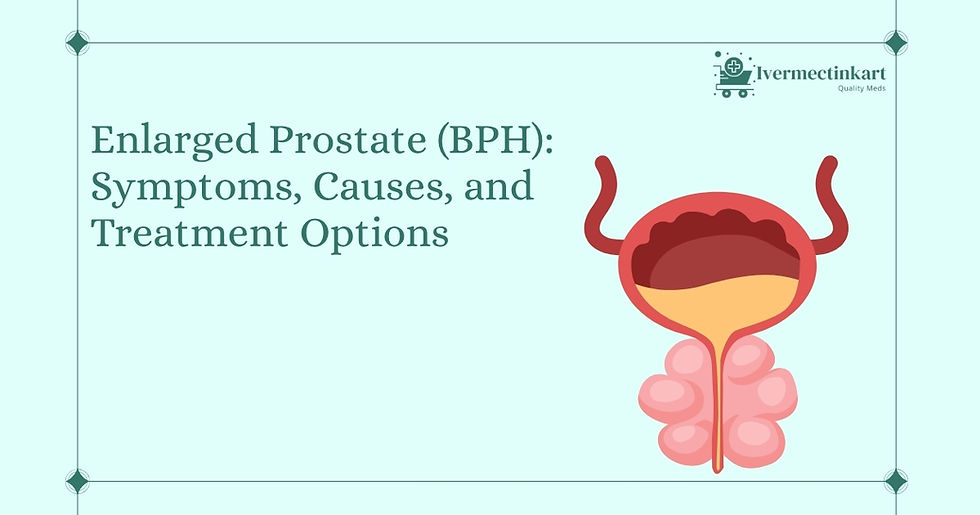
What Is Enlarged Prostate (BPH)?
The prostate is a small gland located below the bladder in men. Its primary role is to produce fluid that nourishes and protects sperm.
As men age, the prostate gland often increases in size. This condition is called benign prostatic hyperplasia.
Because the prostate surrounds the urethra, enlargement can narrow the urinary passage and lead to bladder problems.
BPH is very common, especially in men over the age of 50.
Causes of Enlarged Prostate
The exact causes of prostate enlargement are not fully understood, but several factors contribute to BPH development.
Aging
Aging is the most common cause of prostate enlargement. Hormonal changes that occur with age can stimulate prostate growth.
Hormonal Changes
Changes in testosterone and dihydrotestosterone (DHT) levels may contribute to prostate enlargement.
Family History
Men with a family history of prostate problems may have a higher risk of developing BPH.
Obesity
Excess body weight may increase the risk of prostate enlargement.
Lifestyle Factors
Lack of physical activity, unhealthy diet, and smoking may also contribute to BPH.
Symptoms of Enlarged Prostate
The symptoms of enlarged prostate usually develop gradually and may worsen over time.
Common BPH symptoms include:
Frequent urination, especially at night
Difficulty starting urination
Weak urine stream
Dribbling at the end of urination
Feeling that the bladder is not completely empty
Sudden urge to urinate
Interrupted urine flow
These symptoms occur because the enlarged prostate presses against the urethra and affects urine flow.
Early Signs of Enlarged Prostate
Recognizing the early signs of enlarged prostate can help men seek medical care before complications develop.
Early symptoms may include:
Increased nighttime urination (nocturia)
Difficulty holding urine
Slower urine stream
Mild discomfort during urination
If these symptoms persist, it is important to consult a healthcare professional.
Diagnosis of Enlarged Prostate
Doctors use several tests to diagnose benign prostatic hyperplasia.
Medical History and Symptoms
The doctor will review urinary symptoms and medical history.
Digital Rectal Exam (DRE)
During this exam, the doctor checks the size of the prostate gland.
Urine Tests
Urine tests help rule out infections or other conditions.
PSA Blood Test
Prostate-specific antigen (PSA) tests may be used to evaluate prostate health.
Ultrasound or Imaging Tests
Imaging tests help assess prostate size and detect abnormalities.
Accurate BPH diagnosis is important for choosing the best treatment plan.
Treatment Options for Enlarged Prostate
Treatment for BPH depends on the severity of symptoms and overall health.
Lifestyle Changes
For mild symptoms, lifestyle changes may help improve urinary function.
Helpful strategies include:
Reducing caffeine and alcohol intake
Limiting fluid intake before bedtime
Maintaining a healthy weight
Regular physical activity
Avoiding medications that worsen symptoms
Medications for BPH
Doctors may prescribe BPH medications to reduce symptoms.
Common medications include:
Alpha Blockers
These medications relax the muscles around the prostate and bladder.
5-Alpha Reductase Inhibitors
These drugs reduce prostate size by lowering hormone levels.
Combination Therapy
Sometimes doctors prescribe a combination of medications for better results.
Minimally Invasive Treatments
If medications do not improve symptoms, minimally invasive procedures may be recommended.
These procedures help reduce prostate tissue and improve urine flow.
Examples include:
Transurethral microwave therapy
Transurethral needle ablation
Laser therapy
Surgical Treatment
In severe cases, surgery may be required to remove prostate tissue.
The most common surgical procedure is:
Transurethral Resection of the Prostate (TURP)
Surgery is usually recommended when symptoms significantly affect quality of life.
Natural Ways to Improve Prostate Health
Many men look for natural ways to manage prostate enlargement symptoms.
Helpful tips include:
Eating a diet rich in fruits and vegetables
Maintaining healthy body weight
Exercising regularly
Reducing stress levels
Avoiding excessive alcohol consumption
These lifestyle changes support overall prostate health.
Complications of Enlarged Prostate
If left untreated, BPH may lead to complications such as:
Urinary tract infections
Bladder damage
Kidney damage
Urinary retention
Bladder stones
Early diagnosis and treatment can help prevent these complications.
When to See a Doctor
Men should consult a healthcare professional if they experience:
Difficulty urinating
Blood in urine
Pain during urination
Frequent nighttime urination
Inability to empty the bladder
Seeking medical advice early improves treatment outcomes.
Conclusion
An enlarged prostate (BPH) is a common condition that affects many men as they age. While it is not cancerous, it can cause uncomfortable urinary symptoms and affect daily life.
Understanding the symptoms, causes, and treatment options for enlarged prostate helps men take proactive steps to manage their health.
With proper medical care, lifestyle changes, and appropriate treatment, most men can effectively manage BPH symptoms and maintain a good quality of life.
Health awareness platforms like Ivermectinkart continue to provide valuable information to help individuals make informed healthcare decisions.
FAQs
1. What is an enlarged prostate?
An enlarged prostate, or benign prostatic hyperplasia (BPH), is a condition where the prostate gland increases in size and affects urinary function.
2. What are the common symptoms of BPH?
Common symptoms include frequent urination, weak urine stream, difficulty starting urination, and feeling that the bladder is not empty.
3. Is enlarged prostate dangerous?
BPH is not cancerous, but untreated symptoms can lead to complications such as urinary retention or bladder damage.
4. What treatments are available for enlarged prostate?
Treatment options include lifestyle changes, medications, minimally invasive procedures, and surgery.
5. Can enlarged prostate be prevented?
While aging cannot be prevented, maintaining a healthy lifestyle may reduce the risk of prostate enlargement.


Comments